As an Amazon Associate, we earn from qualifying purchases. Some links on this site are affiliate links at no extra cost to you. Our recommendations are based on thorough research and editorial judgment.


Common Questions About Oximeter Accuracy

Pulse oximeter accuracy refers to the agreement between SpO2 readings and true arterial oxygen saturation, measured against CO-oximeters as the gold standard. Factors impacting accuracy include skin pigmentation, with darker skin often leading to overestimation of saturation levels, and peripheral perfusion, especially in pediatric patients. Studies show device performance varies considerably, particularly at lower saturation levels. Regulatory responses are evolving to address disparities in measurement, highlighting the importance of accuracy across different demographic groups. Further insights on these issues will follow.
Key Takeaways
- Pulse oximeters measure SpO2 levels, but accuracy can vary significantly based on skin pigmentation and peripheral perfusion quality.
- Devices may overestimate oxygen saturation in individuals with darker skin tones, leading to potential treatment delays.
- Accuracy is highest at SpO₂ levels of 90–100% and declines, with significant variability below 80%.
- Specialized sensors and advanced algorithms are necessary for reliable readings in pediatric patients and those with low perfusion.
- Regulatory bodies are emphasizing the need for manufacturers to validate accuracy across diverse skin tones before device approval.
What Is Pulse Oximeter Accuracy and How Is It Measured?
You may be interested
Pulse oximeter accuracy refers to the degree of agreement between the device’s oxygen saturation (SpO2) readings and the true arterial oxygen saturation as determined by blood gas analysis. This accuracy is crucial, as inaccurate readings can result in misdiagnosis or improper treatment decisions.
Measurement methods often involve comparing pulse oximeter readings to those obtained from CO-oximeters, the gold standard for arterial blood measurement. Calibration techniques include controlled clinical trials, where arterial blood samples are analyzed to create a reference dataset.
Key factors influencing accuracy include:
- Peripheral perfusion quality
- Device placement (e.g., earlobe vs. fingertip)
- Environmental interferences (e.g., motion artifacts)
Statistical measures, such as root mean square error, quantify accuracy, ensuring reliable device performance across varying patient conditions. Additionally, measurement precision is essential for managing respiratory conditions, as reliable monitors provide SpO2 and pulse rate readings within 8 to 10 seconds.
How Do Skin Pigmentation and Racial Disparities Affect Readings?
How do variations in skin pigmentation influence the accuracy of pulse oximeter readings? Research indicates that pulse oximeters often overestimate oxygen saturation in individuals with darker skin.
- A study revealed significant bias, with lower accuracy in readings for darkly pigmented skin.
- Higher error rates in oxygen saturation were linked to melanin absorption, distorting sensor signals.
- This bias can lead to delayed treatment of hypoxemia, particularly affecting Black and Hispanic populations.
Despite advancements, existing calibration algorithms primarily focus on lighter-skinned individuals, perpetuating racial disparities in healthcare. Recognition of these issues has generated calls for improved device testing standards to enhance accuracy across diverse racial groups.
Are Pulse Oximeters Reliable for Pediatric Patients?
Given the vital role of oxygen saturation monitoring in pediatric healthcare, the reliability of pulse oximeters for this population has become a significant area of examination.
- Variability in Accuracy: Pulse oximeter accuracy varies based on SpO2 levels. Greatest bias occurs between 81% and 85%, with a median overestimation of 6%. In contrast, accuracy improves in the 91% to 97% range, with a bias of around 1.5%.
- Pediatric Challenges: Smaller sizes of pediatric fingers and earlobes necessitate specialized sensors. Additionally, low peripheral perfusion in neonates can compromise signal quality.
- Accuracy Improvement: Enhanced algorithms and sensor technologies are essential for improving readings, especially for patients with conditions like cyanotic congenital heart disease. Continuous advancements are necessary to guarantee reliable monitoring, as seen in hospital-grade devices which provide precise readings suitable for clinical use.
How Does Oxygen Saturation Level Impact Accuracy?
Oxygen saturation levels profoundly influence the accuracy of pulse oximeters, affecting clinical decision-making.
- Saturation thresholds play an essential role; accuracy is highest at SpO₂ readings of 90–100%, intermediate at 80–90%, and lowest below 80%.
- Reading variability increases as saturation drops, with errors potentially exceeding ±6% in hypoxemic ranges, particularly affecting patients with darker skin tones.
- Approximately 66% of FDA-cleared devices show readings within ±2–3% of arterial blood gas (SaO₂) at higher saturation levels, but this reliability diminishes considerably with lower SpO₂.
- Factors such as peripheral perfusion and environmental conditions further compound inaccuracies, necessitating caution in clinical assessments, particularly below 80% saturation.
- Advanced sensors in high-quality oximeters can enhance accuracy and reliability in readings, especially at lower saturation levels.
Careful interpretation of readings is essential to guarantee patient safety.
What Are the Regulatory Responses to Oximeter Accuracy Issues?
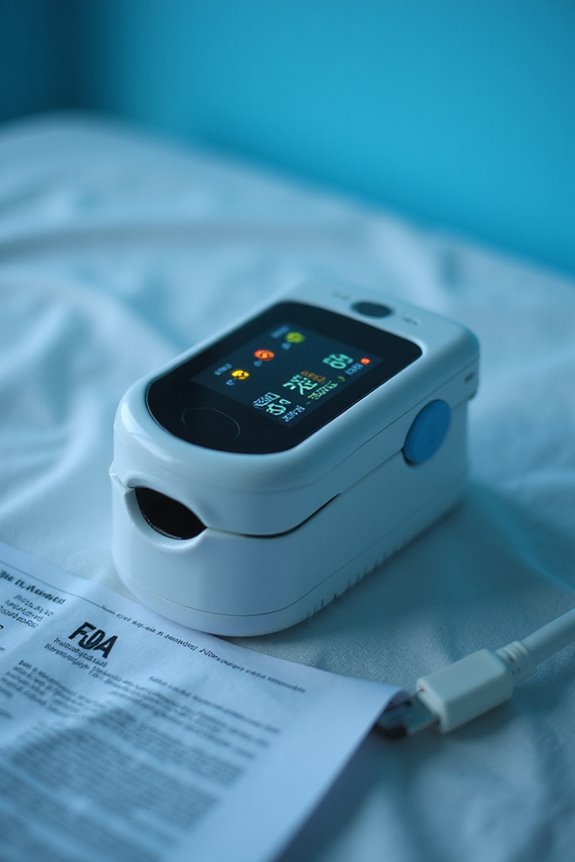
What measures are being taken to address the accuracy issues associated with pulse oximeters? Recent regulatory updates reflect growing concerns about device performance, particularly among diverse skin tones. Key responses include:
- Premarket Submissions: Manufacturers must validate device accuracy across various skin pigmentation before approval.
- Labeling Requirements: Devices demonstrating comparable performance across skin tones will include specific labeling statements.
- 510(k) Data Submission: Previously cleared devices are encouraged to submit new data regarding non-disparate performance.
- Public Transparency: The FDA plans to publish a list of pulse oximeters with confirmed non-disparate performance.
In addition, safety communications have outlined limitations affecting accuracy, advising both patients and healthcare providers to interpret readings cautiously. These measures aim to enhance device testing and guarantee equitable healthcare outcomes.
What Are the Clinical Implications of Inaccurate Readings?
Inaccurate readings from pulse oximeters can lead to significant clinical implications that affect patient care and outcomes.
- Overestimation of oxygen saturation may delay critical therapies, worsening clinical outcomes in conditions like COVID-19.
- Falsely reassuring readings can result in misdiagnoses or inadequate treatment for patients experiencing respiratory distress.
- Disparities in accuracy, particularly for individuals with darker skin tones, exacerbate health inequities and may contribute to increased morbidity and mortality.
- Inaccurate readings can hinder recognition of hypoxemia, leading to treatment delays and inappropriate care decisions.
- Errors in pulse oximetry can complicate monitoring in acute settings, risking adverse clinical trajectories and potential hospital readmissions.
- Moreover, factors like accuracy issues stemming from improper positioning or nail polish can further compromise the reliability of readings.
Collectively, these factors underscore the importance of accurate pulse oximetry in delivering effective patient care.
How Can Patients and Clinicians Ensure Accurate Assessments?
Ensuring accurate assessments with pulse oximeters is essential for effective patient care, particularly in clinical settings where timely interventions are necessary.
Proper Device Selection
- Use FDA-cleared pulse oximeters, ensuring accuracy within ±2–3% of arterial oxygen saturation (SaO2).
- Compare readings with arterial blood gas measurements when possible.
Optimal Sensor Placement
- Place sensors on well-perfused areas like fingers or earlobes.
- Consider alternative sites, such as the forehead, for patients with compromised circulation.
Device Maintenance
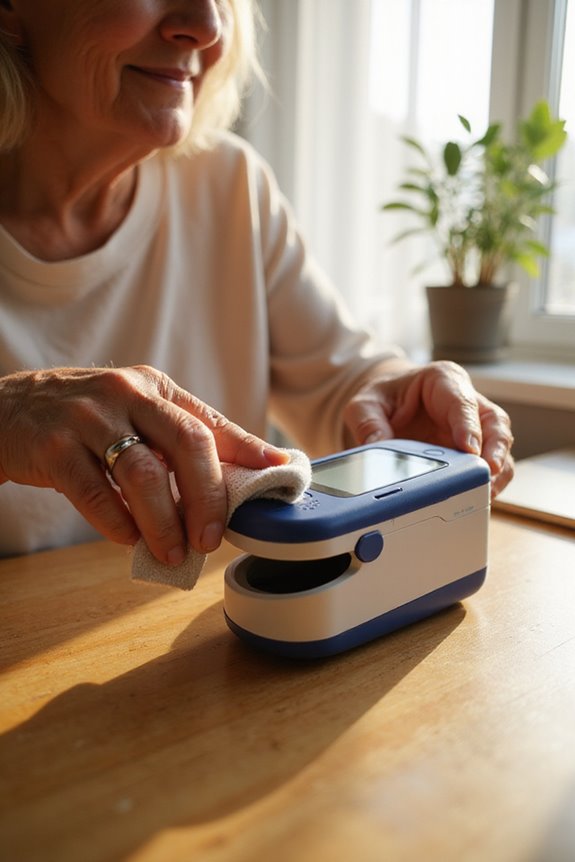
- Regularly clean devices to prevent contamination.
- Conduct periodic accuracy checks against arterial blood gas readings. Additionally, measurement accuracy is critical for reliable SpO2 levels, as inconsistent readings can lead to misdiagnosis or delayed treatment.
Frequently Asked Questions
How Do I Choose the Right Pulse Oximeter for Personal Use?
To choose the right pulse oximeter for personal use, one should consider types of oximeters available, prioritize user reviews, and evaluate factors like accuracy, comfort, and ease of use to guarantee reliable health monitoring.
Can Environmental Factors Affect Pulse Oximeter Readings?
Environmental factors considerably affect pulse oximeter readings. Temperature effects can alter signal strength, while varying lighting conditions may introduce interference, impacting the accuracy of measurements and ultimately influencing health monitoring for individuals in diverse settings.
What Should I Do if My Oximeter Gives Inconsistent Readings?
When faced with inconsistent readings, individuals should employ troubleshooting techniques such as retaking measurements, changing fingers, and evaluating environmental factors. Monitoring trends over time is essential for accurate evaluation of respiratory status.
Are There Any Home Remedies to Improve Pulse Oximeter Accuracy?
In a world where home remedies promise miracles, oximeter maintenance remains simpler: warm hands, avoid nail polish, and position correctly. Alas, even grandma’s secret soup won’t enhance accuracy; only proper technique does the trick.
How Often Should I Calibrate My Pulse Oximeter?
Calibration frequency for pulse oximeters typically varies, as most require minimal user intervention. Regular comparative checks among devices are essential for accuracy maintenance, ensuring consistent performance and reliability in both clinical and home settings.