As an Amazon Associate, we earn from qualifying purchases. Some links on this site are affiliate links at no extra cost to you. Our recommendations are based on thorough research and editorial judgment.


Is Infrared Heat Therapy Safe? 2026 Safety & Efficacy Guide

Infrared heat therapy is typically safe, offering benefits like pain relief and improved circulation. Risks include overheating, dehydration, and complications for individuals with specific health conditions such as heart disease and hypertension. It is contraindicated in cases of pregnancy and certain skin conditions. Clinical research suggests significant efficacy in chronic pain management, with a low incidence of adverse effects. Continuing exploration may reveal further insights into its safety and efficacy profile.
Key Takeaways
- Infrared heat therapy is generally safe for most users when applied correctly, offering benefits like pain relief and improved circulation.
- Prolonged exposure can lead to overheating, dehydration, or heat exhaustion; users should monitor their sessions.
- Those with specific health conditions, such as heart disease or diabetes, should consult a physician before use.
- Individuals experiencing claustrophobia or with thin body types may face risks, including airway irritation or thermal injuries.
- It’s contraindicated for pregnant women, those with pacemakers, and individuals with certain skin conditions; safety precautions are essential.
Overview of Infrared Heat Therapy
You may be interested



Infrared heat therapy represents a significant advancement in therapeutic modalities, utilizing specific light wavelengths to penetrate human tissue. This method differs from traditional steam saunas by heating the body directly rather than the surrounding air, allowing for deeper tissue penetration.
Key infrared benefits include:
- Enhanced detoxification through deep cellular sweating.
- Pain relief and muscle spasm reduction.
- Accelerated tissue healing and improved circulation.
- Support for weight loss via increased metabolic activity.
The therapy’s history dates back to its origins in the early 20th century, with evolving applications in various medical fields. Overall, infrared heat therapy offers a unique approach to wellness, combining physical relief and relaxation in a safe environment.
Safety Profile and Risk Factors
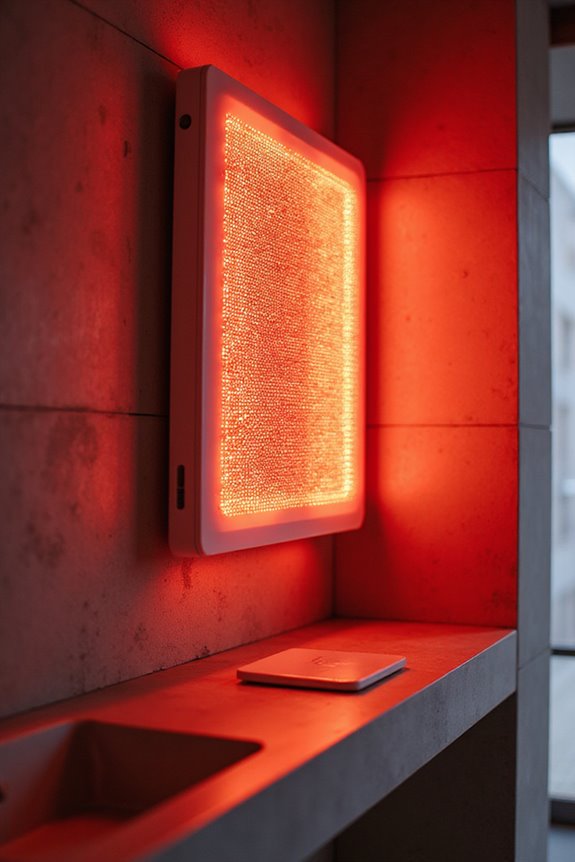
The safety profile of infrared heat therapy indicates that it is generally safe for most users when applied correctly. However, a thorough risk evaluation reveals several factors to take into account:
- Prolonged use may lead to overheating, dehydration, or heat exhaustion.
- Certain health conditions, such as heart disease or scleroderma, heighten risks.
- Users may experience airway irritation or thermal injuries, particularly individuals with thin body types.
- Claustrophobia can pose challenges in enclosed sauna spaces.
- Near-infrared exposure raises concerns regarding skin cancer and accelerated aging.
Implementing safety measures is critical. Users should stay hydrated, monitor body temperature, and take regular breaks. Consulting healthcare professionals is recommended, especially for those with underlying health conditions, to guarantee safe practice during infrared heat therapy.
Efficacy in Pain Management
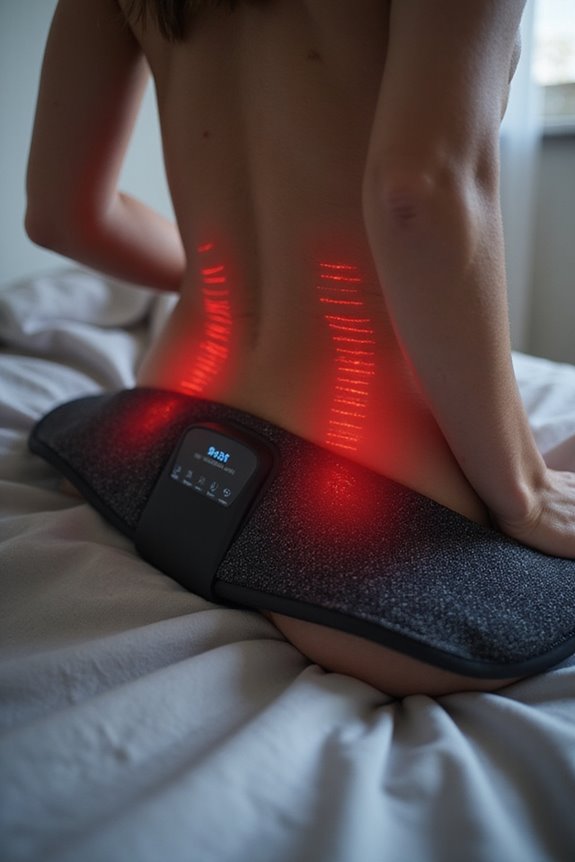
How effective is infrared heat therapy in managing pain? Clinical evidence supports its efficacy, demonstrating significant pain relief in various conditions.
- A randomized controlled trial showed a 50% reduction in chronic low back pain over seven weeks, outperforming placebo (P<0.0001).
- Infrared therapy reduces pain scores in chronic pain patients, with benefits lasting beyond initial sessions.
- Studies indicate effectiveness for osteoarthritis, with reductions in visual analog scores.
- Therapeutic mechanisms include vasodilation, enhanced blood flow, and tissue repair through collagen synthesis.
- Infrared treatment improves joint flexibility and reduces stiffness, aiding functional recovery.
Recommended Products
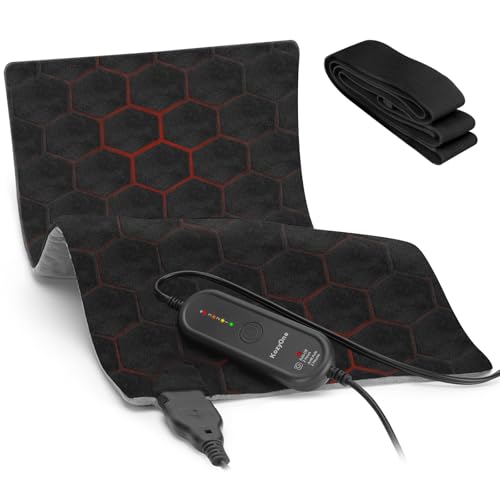
【Advanced Far Infrared & Negative Ion Therapy】 Our advanced technology goes beyond standard heating pads by generating deep-penetrating far infrared heat and releasing soothing negative ions. This powerful combination creates a deeply relaxing experience that helps alleviate discomfort more effectively than conventional heat therapy.
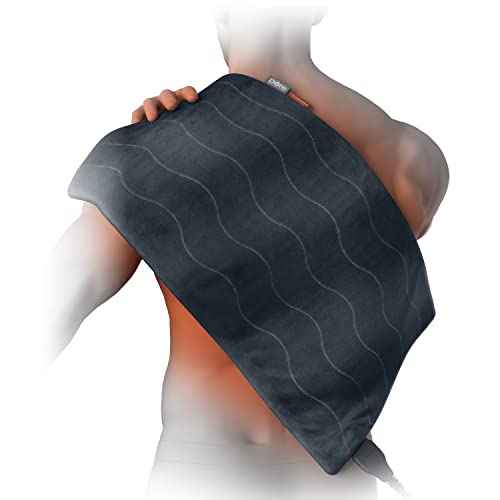
Unlike Other Heating Pads: Our innovative InfraWave Technology offers an advanced level of treatment. The heat-retaining ceramic beads send safe, far infrared wavelengths below the skin’s surface to target sore spots and penetrate muscles more deeply than traditional heating pads.

DEEP WARMTH & ULTIMATE RELAXATION - Developed by Bob and Brad, this professional-grade heat pad utilizes natural ceramic beads to emit 8-15μm far-infrared waves. Unlike superficial heating wires, this advanced design delivers consistent thermal energy to deeper layers. It instantly elevates your daily unwinding routine, promoting profound, full-body relaxation to perfectly support active users and the elderly.
Biological Effects of Infrared Radiation
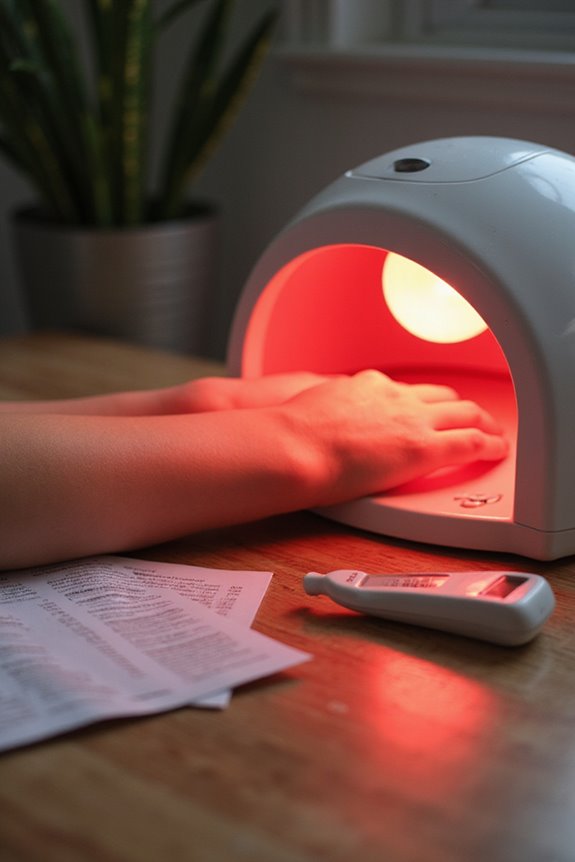
What biological effects can be attributed to infrared radiation?
Infrared radiation (IR) induces various biological mechanisms in the body, primarily through infrared absorption by tissues. Key effects include:
- Heat Generation: IR causes molecular vibrations, leading to increased local temperatures and enhanced circulation.
- Cell Cycle Impact: Prolonged exposure can induce cell cycle arrest in certain cancer cell lines, particularly during the G2/M phase.
- Oxidative Stress: IR can trigger DNA damage, activating repair pathways like ATM/ATR-p53-p21.
- Immune Function: Near-infrared light enhances ATP production, reducing oxidative stress and inflammation, improving immune responses.
- Tissue Repair: FIR promotes higher survival rates in compromised cells and accelerates tissue regeneration through increased blood flow.
These effects underscore the importance of understanding IR’s biological implications for therapeutic applications.
Contraindications and Precautions
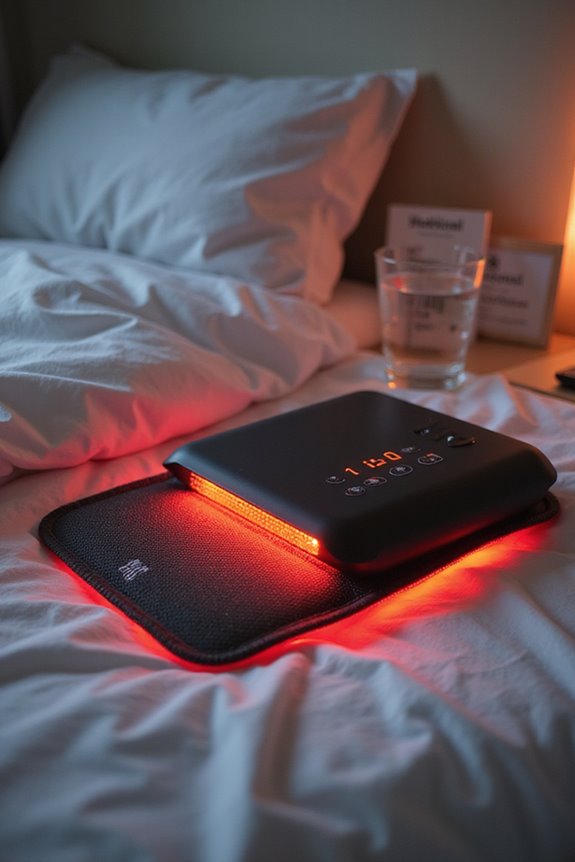
Understanding the contraindications and precautions associated with infrared heat therapy is essential for ensuring safety and efficacy. The following contraindications summary highlights key areas of concern:
- Cardiovascular Conditions: Includes hypertension, heart failure, and deep vein thrombosis. Increased blood flow may exacerbate conditions.
- Skin Conditions: Avoid use on dermatitis, eczema, or after skin treatments like waxing.
- Metabolic Disorders: Diabetics and individuals with thyroid issues should consult a physician.
- Pregnancy and Implants: Use is contraindicated during pregnancy and for those with pacemakers or metal implants.
Precautionary measures include consulting healthcare providers before proceeding with infrared therapy, particularly for individuals with existing health issues. Awareness of these factors can help mitigate risks and promote safe usage.
Recommended Products
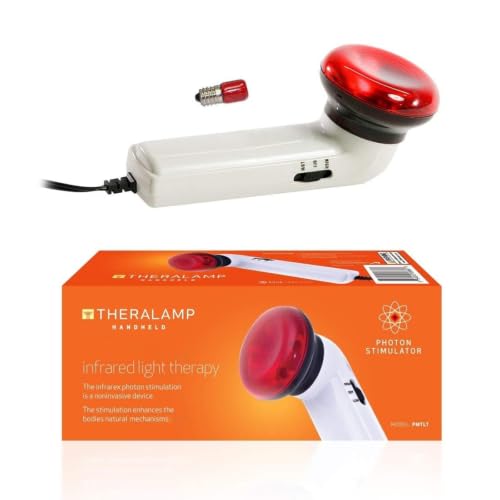
LOW-LEVEL LIGHT: Whether you’re an athlete, a weekend warrior, or just love hitting the gym, there’s bound to be some soreness involved. Red light devices can help to ease elbows, knees, shoulders, and hands as well as your back.

DRUG-FREE PAIN RELIEF: Experience soothing relief from muscle aches, joint pain, cold symptoms, and facial care with the Beurer IL50 Infrared Heat Lamp, offering a natural, drug-free solution for everyday discomfort

Full-Body Comfort with Red Light Therapy for Body : Use this wraparound device to enjoy gentle, targeted red light therapy —ideal for daily routines focused on balance, comfort, and whole-body support.
Clinical Research and Evidence
Clinical research and evidence surrounding infrared heat therapy reveal significant findings regarding its effectiveness and safety.
- Clinical Trials: Studies indicate that infrared therapy can reduce chronic low back pain by approximately 50% over six weeks, with double-blind, placebo-controlled trials confirming its safety and ease of use.
- Treatment Protocols: No significant adverse effects have been reported, with a low risk of thermal injury noted when devices feature automatic shut-off mechanisms.
- Effectiveness: Infrared therapy has shown efficacy comparable to other heat modalities for musculoskeletal conditions, although it does not consistently demonstrate superiority over conventional treatments.
- Long-term Safety: Evidence supports its long-term safety in chronic conditions, with outcomes suggesting positive benefits in heart failure management and post-surgical recovery. Additionally, infrared therapy can enhance muscle relaxation by promoting increased blood flow and reducing muscle tension.
Regulatory Status of Infrared Devices
The regulatory status of infrared devices is defined by specific classifications and guidelines set forth by the FDA.
- Infrared therapeutic lamps fall under Class II medical devices (Product Code ILY), regulated by 890.5500.
- These devices typically require adherence to special controls but are exempt from premarket notification (510(k)) under certain conditions.
- Some infrared devices utilize LASER technology (Product Code NHN) for non-thermal pain relief.
- FDA does not classify infrared lamps as life-sustaining, which simplifies regulatory pathways.
Recent regulatory updates emphasize that while infrared devices must comply with FDA regulations, coverage determinations by Medicare and private insurers may vary, impacting their accessibility. Insurers often exclude infrared heating pads due to insufficient clinical data and comparably higher costs. Additionally, the effectiveness of infrared heating pads for pain conditions has been supported by user feedback and clinical studies.
Recommended Products

TDP heat lamp with a large head size designed as a far-infrared heating lamp.

【275W Power】: 275W Red light tehrapy heat lamp bulb power and infrared light can penetrate the skin, ideal for heat lamps and saunas, helping with pain relief. 275W infrared light bulb is perfect for red light therapy

Easy Installation and Long Lifespan: This heat lamp is easy to install, simply screw it into a standard E26/E27 socket, can provide an excellent 24-hour radiant heat source. The life of this heat lamp is up to 6000 hours, reducing the need to replace bulb frequently
Practical Considerations for Patients
When considering infrared heat therapy, what practical factors should patients keep in mind to guarantee safe and effective use?
- Session Duration: Limit sessions to around 20 minutes to reduce risks of skin damage, dehydration, or heat stroke.
- Temperature Control: Adhere to manufacturer guidelines for appropriate temperature settings. Avoid direct skin contact on sensitive areas.
- Avoid Risks: Do not use infrared therapy on open wounds, broken skin, or areas with active infections.
- Supervision: Patients with communication difficulties or impaired temperature sensation should have supervision during treatment.
- Hydration: Maintain adequate hydration before and after sessions to prevent dehydration.
Recommended Products

Comfortable hands free design: This red light therapy belt for body weighs 0.74 lbs and can be used hands-free at home. It comes with two power cords, one with adapter and one with USB interface. The power cord with USB is for power pack(power pack is Not included in the packaging). If you do not use power pack, we recommend that you use the power cord with adapter, which uses wide voltage DC 100-240 V, AC 5V2A, which is longer, safer and more applicable, also It can be put in a handbag.
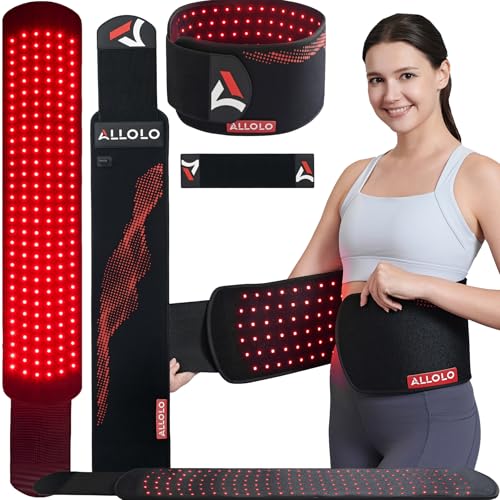
UPGRADED 3 IN 1 LED BEAD: ALLOLO red light therapy for body has a total of 180pcs professional lamp beads, each lamp contains 3 chips (180*660nm red light and 360*850nm infrared light). And ALLOLO red light therapy belt provides 4 modes, red+infrared light mode, red light mode, infrared light mode, and pulse mode. Pulse mode is our red light therapy wraps all lights (660nm red lights and 850nm infrared lights) at a rate of 600 flicks per minute will generate 10HZ pulse rate energy.

UPGRADED 3 IN 1 LED BEAD: ALLOLO red light therapy for body has a total of 112pcs professional lamp beads, each lamp contains 3 chips(112*660nm red light and 224*850nm infrared light). And ALLOLO red light therapy belt provides 4 modes, red+infrared light mode, red light mode, infrared light mode, and pulse mode.Pulse mode is our red light therapy wraps all lights (660nm red lights and 850nm infrared lights) at a rate of 600 flicks per minute will generate 10HZ pulse rate energy.
Future Perspectives in Infrared Therapy
Future Perspectives in Infrared Therapy outline the evolving landscape of this therapeutic approach, highlighting advancements and projected trends.
- Technological Advancements: Enhanced wavelength precision allows for targeted therapies, addressing specific health issues. Hybrid models offer customizable treatments, while smart sauna technology optimizes session parameters.
- Future Applications: Research is expanding into innovative uses, such as stress reduction and muscle recovery.
- Market Growth: The infrared sauna market is expected to increase from $1.89 billion in 2026 to $3.58 billion by 2032, fueled by health consciousness and wellness trends.
- Research Needs: Longitudinal and comparative studies are essential to establish the long-term efficacy and safety of infrared therapy. Additionally, incorporating insights from safety features of other therapeutic devices can enhance the understanding of infrared treatments.
Frequently Asked Questions
Can Infrared Therapy Be Used During Pregnancy?
During pregnancy, infrared therapy beckons like a warm embrace, yet pregnancy precautions and safety guidelines are essential. Caution is advised, as moderation and professional consultation safeguard both mother and baby from potential heat-related risks.
How Long Should Each Infrared Therapy Session Last?
Session duration for infrared therapy typically ranges from 15 to 45 minutes, depending on individual comfort. Beginners should start with 2-3 sessions per week, gradually increasing frequency as tolerance and experience improve.
Is Infrared Therapy Effective for Weight Loss?
Infrared therapy may seem like a magic wand for weight loss, offering a potential caloric burn and metabolic boost. However, it works best alongside a balanced diet and exercise, not as a standalone solution.
Can I Use Infrared Therapy With Other Treatments?
Combining therapies, including infrared therapy, demonstrates promising treatment compatibility with conventional methods. Careful consideration of individual conditions guarantees enhanced therapeutic outcomes while minimizing risks, fostering a supportive environment for those seeking holistic approaches to health and well-being.
What Should I Do if I Feel Uncomfortable During Treatment?
When discomfort arises during therapy, individuals should prioritize discomfort management by immediately ceasing treatment, adjusting the environment, and hydrating. Listening to one’s body fosters a supportive atmosphere, ensuring a safer and more enjoyable experience for everyone involved.