As an Amazon Associate, we earn from qualifying purchases. Some links on this site are affiliate links at no extra cost to you. Our recommendations are based on thorough research and editorial judgment.


Common Questions About Magnifying Glasses For Reading

Magnifying glasses are optical devices that use convex lenses to enhance text visibility. They benefit users with presbyopia and low vision, often improving reading speed by 14 words per minute. Available types include handheld, stand, dome, and electronic magnifiers. Selection of magnification power is guided by diopters, typically ranging from +0.75 to +4.00. Magnifying glasses have economic benefits, supporting precise tasks and increasing job prospects. Their impact on quality of life and independence is substantial, with ongoing insights available.
Key Takeaways
- Magnifying glasses typically provide 2x to 6x magnification, with higher options available through multi-lens designs or electronic devices.
- They are beneficial for individuals with presbyopia or low vision, enhancing reading speed and comfort significantly.
- Diopter measurements guide magnification selection, with +1.00 to +1.25 diopters suitable for minor vision difficulties.
- Handheld and stand magnifiers are popular choices, with built-in LED lights aiding visibility in low-light conditions.
- Using magnifying glasses can improve independence and quality of life, allowing users to engage in various near-vision tasks without assistance.
What Are Magnifying Glasses and How Do They Work?
You may be interested


Magnifying glasses, which employ a convex lens, serve a fundamental purpose in enhancing the visibility of text and intricate details. The optical principles involved include light refraction, where the convex lens bends light rays inward, creating a virtual image that appears larger than the actual object.
Key Features:
- Lens Types: Basic single-lens designs offer magnification from 2 to 6 times, while multi-lens configurations, like triplet magnifiers, achieve higher magnifications.
- Focal Length: The distance between the lens and the focal point directly influences magnification.
- Materials: Typically constructed from glass or plastic, these lenses are mounted in a frame for usability.
Magnifying glasses effectively facilitate clearer vision for reading and observing fine details, and many models also incorporate built-in LED lights to enhance visibility in low-light conditions.
Who Can Benefit From Using Magnifying Glasses?
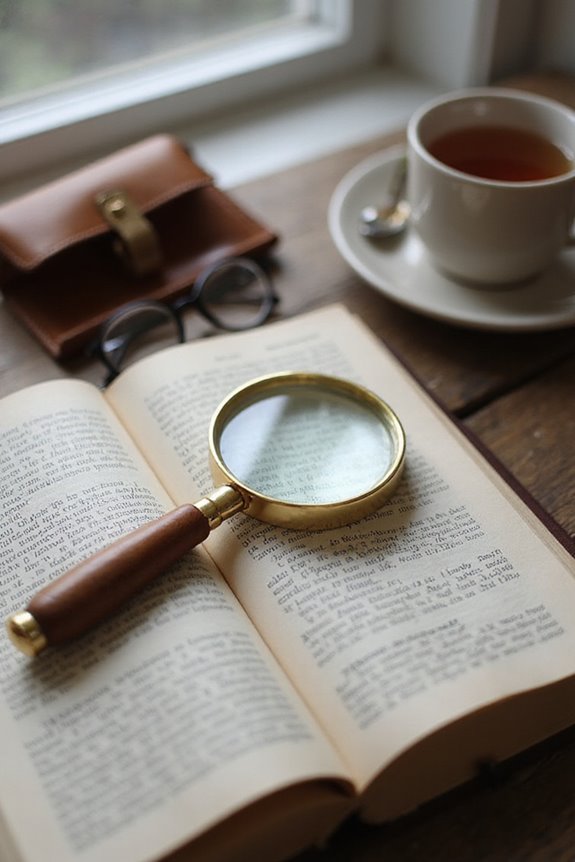
A considerable number of individuals can benefit from the use of magnifying glasses, particularly those experiencing age-related vision changes or specific low vision conditions.
Who Benefits?
- Adults with presbyopia and other age-related conditions often struggle with small print.
- Users typically see a significant increase in reading speed; studies report an average gain of 14 words per minute after one month of use.
- Individuals with low vision due to blur or central scotoma may experience varying levels of improvement.
- Even those who have never needed prescription glasses may find magnifying glasses helpful as normal aging affects near-vision capability.
Magnifying glasses address these visual challenges, enhancing reading comfort and extending reading durations, thereby improving overall quality of life.
Recommended Products

DESIGNED FOR READING: Eyeglasses for women +1.0 that help people who have difficulty reading small print or seeing objects up close. Reading glasses are also called readers or cheaters

SEE FINE PRINT in newspapers, on packaging and on the computer with Yogo Vision Reading Magnifying Glasses. These one-power readers for women and men make text easily readable by aging eyes.

ULTIMATE PORTABILITY: Say goodbye to misplaced reading glasses. The world's thinnest armless readers with our portable keychain is a versatile vision solution that travels anywhere. The compact case attaches to your keyring or fits in your pocket.
What Types of Magnifying Glasses Are Available for Reading?
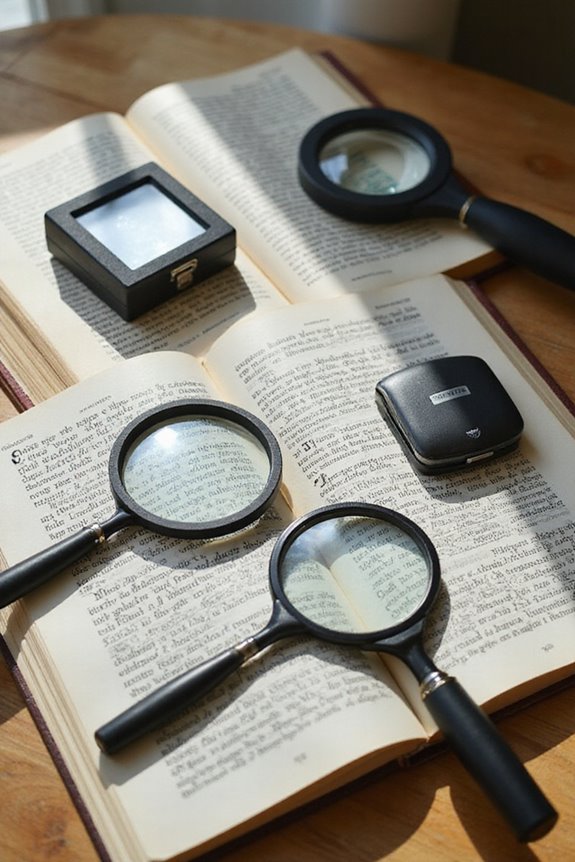
Various types of magnifying glasses are available for reading, each designed to cater to specific visual needs and preferences.
Handheld Magnifiers
- Portable options with 2.5x to 5x magnification.
- Often utilize aspheric lenses for clarity.
Stand Magnifiers
- Hands-free use for long reading sessions.
- Typically higher magnification with built-in illumination.
Dome Magnifiers
– Glide over pages for even, well-lit magnification.
Electronic Magnifiers
– Use cameras and screens for variable magnification and enhanced contrast.
Specialized Devices
- Includes binocular and Fresnel magnifiers for various applications.
- Available in portable formats, such as pocket magnifiers, for convenience on-the-go.
Each type serves unique purposes, enhancing reading experiences effectively. Additionally, magnification strength is an important factor to consider when selecting a magnifying glass that meets individual reading needs.
Recommended Products

10X 30X EXTRA LARGE AND CLEAR VIEWING AREA: Floor magnifier viewing areas up to 7 inches (diagonal), allows you view a larger area without repeatedly moving the magnifier lamp. 10X and 30X high-definition magnifies 1000% or 3000% of the area without distortion

𝗖𝗢𝗟𝗟𝗔𝗣𝗦𝗜𝗕𝗟𝗘 & 𝗗𝗘𝗧𝗔𝗖𝗛𝗔𝗕𝗟𝗘 𝗦𝗧𝗔𝗡𝗗: Tired of holding your magnifier for long periods? Our expertly crafted stand ensures hands-free convenience for seamless reading or crafting sessions. Easily collapsible and detachable, it offers unmatched versatility and effortless storage—perfect for lightweight or heavier magnifiers.
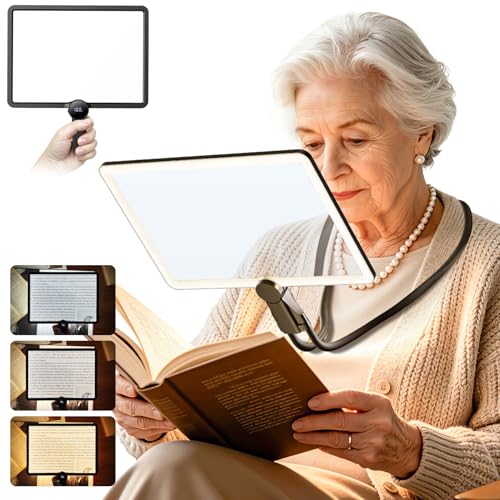
Hands-Free & Handheld — Best of Both Worlds: Enjoy flexible reading with the bendable gooseneck—wear it around your neck or set it on your desk for hands-free use. No more hand fatigue during long reading sessions! The magnifier detaches easily for a convenient handheld option, perfect for quick, on-the-go viewing
How Do I Choose the Right Magnification Power?
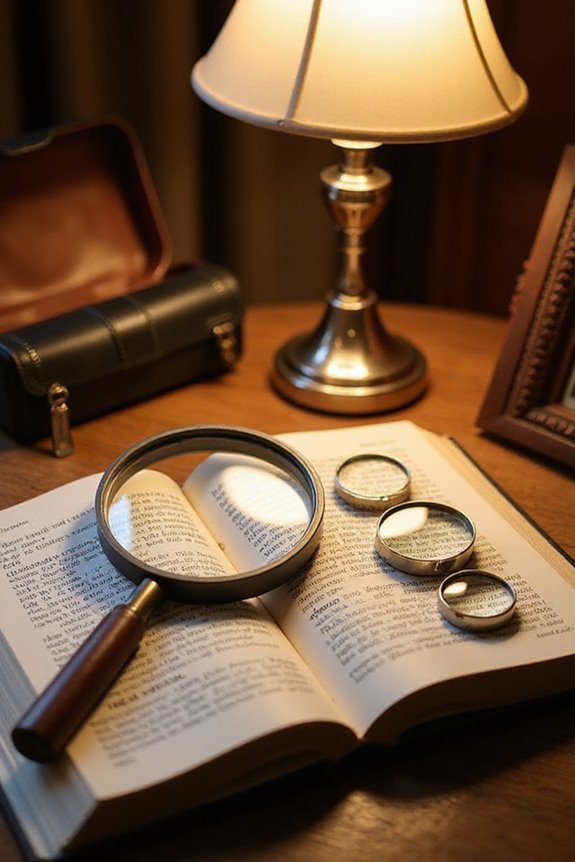
Choosing the appropriate magnification power is a critical step in enhancing the reading experience, particularly for those utilizing handheld or stand magnifiers.
Diopter Measurement
Magnification selection is often guided by diopter measurement, typically ranging from +0.75 to +4.00. Higher diopter values indicate stronger magnification.
Assessing Needs
- For minor vision difficulties, +1.00 to +1.25 diopters are recommended.
- Consider activity type; computer work may need less power than reading.
- Evaluate focal distance; comfortable reading is usually between 14 and 18 inches.
Consultation
Individuals with specific vision needs should consult an eye care professional. Utilizing a diopter chart can also assist in determining the appropriate magnification strength to guarantee clarity and comfort.
Recommended Products

CLEAR ACTUAL GLASS LENS:The magnifying glass itself is made from actual glass, not plastic, and has a crystal clear view with zero distortion

Rectangular Full Page Design: Page-style magnification area in line with natural reading design. The magnification area is 5" X 7", covering a large viewing area without the need to keep adjusting the position of your hand, making reading easier.

Material: Our mini magnifying glasses are made plastic, not easily damaged and has a long usage time.
Are Magnifying Glasses Effective for Improving Reading Speed?
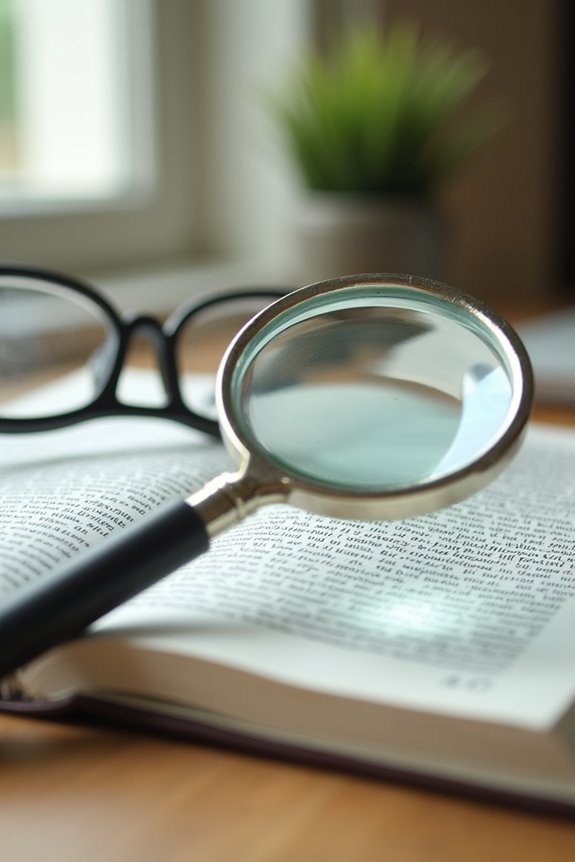
How effective are magnifying glasses in enhancing reading speed? Research indicates that magnifying glasses, particularly handheld versions, markedly improve reading speed and stamina in individuals with visual impairments. Key findings include:
- Reading Speed Improvement: A mean increase of 14 words per minute (wpm) was observed after one month of use, with maximum speeds rising by 18 wpm.
- Sustained Reading: Users can read more pages continuously, benefiting from reduced strain and increased comfort.
- Magnification Effects: Higher magnification levels are essential for individuals with low vision, restoring reading speed to normal levels.
- Long-Term Benefits: Regular use leads to sustained enhancements in reading stamina, allowing for prolonged reading sessions.
Can I Use Magnifying Glasses for Tasks Other Than Reading?
Magnifying glasses extend their utility beyond reading, serving a variety of tasks that require enhanced visual acuity.
Precision Tasks
These tools are invaluable for hobbies, crafts, and model building, as they allow users to inspect fine details with ease. They support low vision patients in daily activities like writing or playing musical instruments, particularly when mounted hands-free.
Grooming Assistance
Magnifying mirrors aid in grooming tasks, such as makeup application and shaving, though users may face challenges due to lateral inversion.
Additional Uses
Magnifying glasses facilitate professional work requiring detailed viewing, including quality control in manufacturing and administrative tasks involving fine print. Therefore, their versatility caters to a wide range of needs beyond mere reading.
Recommended Products
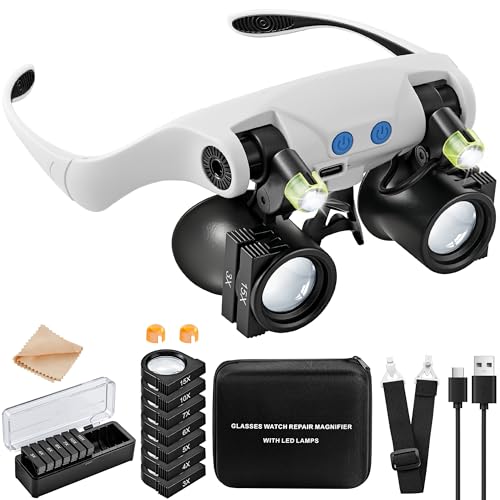
Multiple Magnification Options: Includes 14 interchangeable lenses (3X, 4X, 5X, 6X, 7X, 10X, 15X) to meet different needs. These magnifying glasses are suitable for close work, such as jewelry inspection, watch repair, electronics, and detailed crafts. Best viewing distance: 5–10cm; higher magnification requires shorter working range. (For single-eye viewing only, not for binocular use.)

Ultra Compact and Convenient Keychain Magnifier

【4 Interchangeable Lenses for Versatile Use】: This head magnifier comes with 4 sets of premium optical lenses (2X, 6X, 10X, 24X), allowing you to switch magnifications effortlessly for various tasks such as watch repair, jewelry inspection, and micro-soldering.
How Are Electronic Magnifiers Different From Handheld Magnifiers?
In what ways do electronic magnifiers distinguish themselves from traditional handheld magnifiers?
Device Design
- Electronic magnifiers utilize a digital screen, displaying images captured by a camera sensor, unlike handheld magnifiers that rely on optical magnification through lenses.
- Electronic models often feature larger, high-resolution displays, enhancing visual clarity.
- Handheld magnifiers are compact, while electronic designs may be bulkier to accommodate screens.
Magnification Capabilities
- Electronic magnifiers offer variable zoom levels, typically ranging from 2x to 32x or more, exceeding the fixed zoom of handheld models.
- They provide smooth zooming and image panning, enhancing usability.
Visual Features
– Advanced optics and customizable color modes in electronic models improve readability and reduce eye strain, features often absent in traditional handheld magnifiers.
Recommended Products

【High Power Magnification】This 5.0 inch portable magnifier reading aids provide 2X-32X zoom magnification, the unit has been an absolute lifesaver for who has macular degeneration. With this unit you can shop the grocery store, read restaurant menus, plus magazines and books.

2X-25X Magnification: 3.5-inch digital magnifier supports 2x, 8x, 16x, and 25x magnification; designed for short-term reading assistance, helping to zoom in on text with ease; portable and ideal for quick visual aid
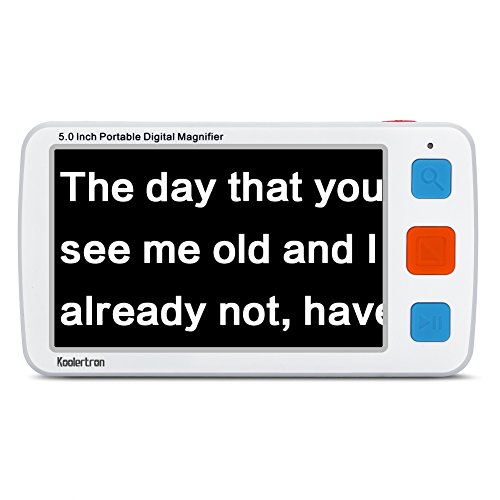
5inch big screen, 4X/8X/16X/24X/32X switchable magnification
Do I Need a Prescription to Purchase Magnifying Glasses?
Purchasing magnifying glasses does not typically require a prescription, particularly for over-the-counter (OTC) options. OTC readers are designed for simple vision correction, with standardized lens magnifications ranging from +0.25 to +6.00 diopters.
Key Points:
- Prescription Requirements: Prescription glasses necessitate a professional eye exam and tailored specifications for complex vision issues, such as differing prescriptions or astigmatism.
- OTC Options: OTC magnifiers are accessible in retail locations without the need for an eye exam, providing a convenient solution for most age-related near vision difficulties.
- Limitations: OTC glasses may not adequately address specific vision correction needs, particularly for individuals with significant refractive errors or multi-focal requirements.
What Are the Economic Benefits of Using Magnifying Glasses?
Access to magnifying glasses can greatly enhance economic opportunities for individuals, particularly in low-income communities. The economic advantages of these tools include:
- Income Improvement: Users can experience a reported 33% increase in earnings due to enhanced vision.
- Employment Opportunities: Improved vision facilitates a return to work, especially for those previously inactive, thereby expanding job prospects.
- Poverty Reduction: Magnifying glasses allow participation in near-vision tasks, contributing to poverty alleviation.
- Cost-Effectiveness: They are relatively inexpensive, making them accessible for those in need.
- Support for Health Equity: By addressing vision-related barriers, magnifying glasses promote equitable access to economic advancement.
How Do Magnifying Glasses Impact Quality of Life and Independence?
Magnifying glasses greatly enhance quality of life and independence for individuals facing vision challenges. These tools facilitate visual independence by enabling users to:
- Complete near-vision tasks, such as reading, sewing, and managing medications.
- Engage in household chores, enhancing self-reliance in daily activities.
- Participate in social interactions, increasing confidence and reducing isolation.
Quality enhancement through improved vision leads to measurable benefits, including:
- A 16% increase in the near vision quality of life index among low-income communities.
- Reduced anxiety and depression linked to vision impairment.
- Sustained engagement in hobbies and learning, supporting mental acuity.
Community-based access to magnifying glasses further empowers individuals, promoting proactive vision health behaviors and reducing caregiver burdens.
Frequently Asked Questions
Can Children Use Magnifying Glasses for Reading?
Children can effectively use magnifying glasses for reading assistance, enhancing their childhood vision by enabling them to view small print clearly. This tool fosters curiosity and engagement, supporting their overall learning and development during formative years.
How Do I Clean My Magnifying Glasses Safely?
Cleaning magnifying glasses safely resembles nurturing a delicate flower. Using gentle cleaning materials and techniques preserves clarity. A soft cloth, mild soap, and careful handling foster longevity, ensuring the beauty of vision remains vibrant for all users.
Are There Magnifying Glasses Designed for Left-Handed Users?
Magnifying glasses designed for left-handed users feature ergonomic designs that enhance comfort and usability. These specialized models often include anti-distortion lenses and secure grips, ensuring an ideal reading experience tailored for left-handed individuals.
Can I Wear My Regular Glasses With Magnifying Glasses?
Magnifying marvels may mesh with regular glasses, but magnification levels and prescription compatibility require careful consideration. Users often find comfort in tailored combinations, ensuring clarity and connection while engaging in detailed tasks or hobbies together.
How Long Can I Use Magnifying Glasses Without Discomfort?
The duration of magnifying glass usage varies based on individual visual comfort and diopter strength. Regular assessments and breaks enhance usage duration, fostering an inclusive reading experience while minimizing discomfort and promoting overall eye health.