As an Amazon Associate, we earn from qualifying purchases. Some links on this site are affiliate links at no extra cost to you. Our recommendations are based on thorough research and editorial judgment.

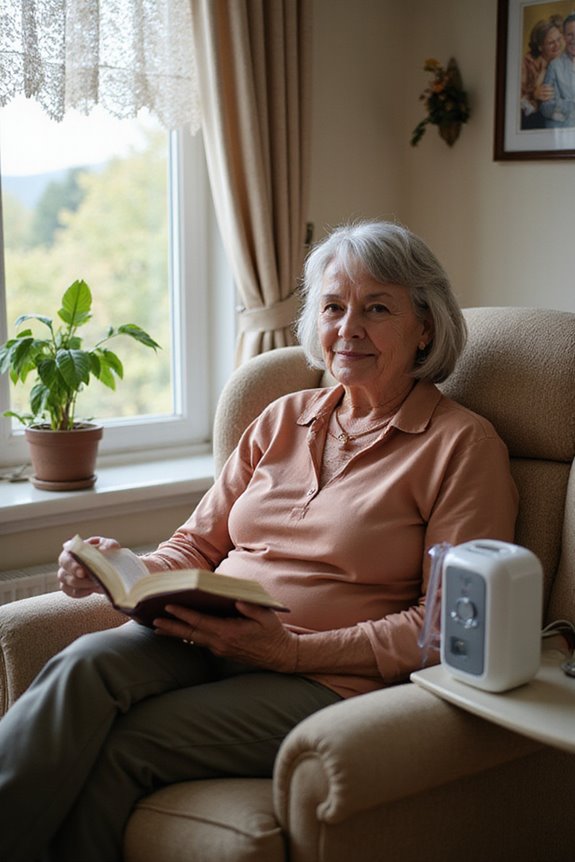
What Is A Portable Oxygen Concentrator?

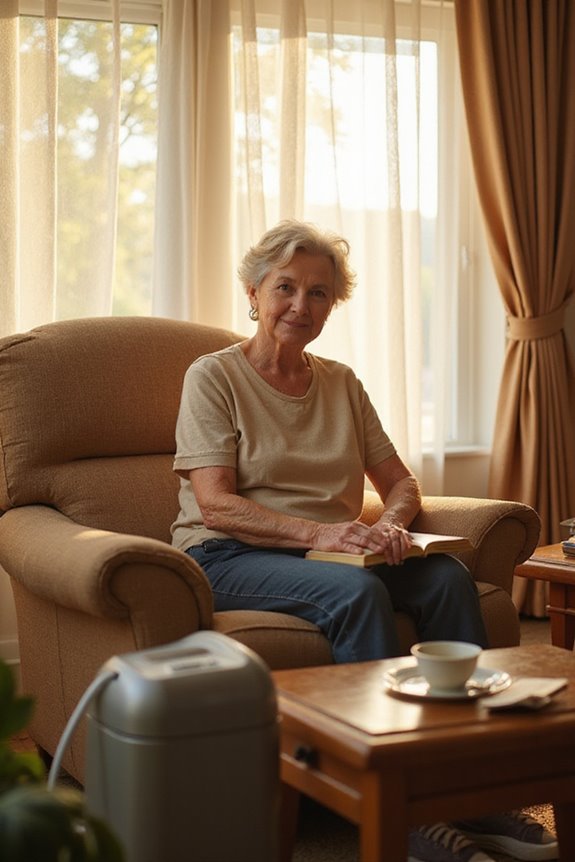
A portable oxygen concentrator (POC) is a medical device designed for individuals requiring supplemental oxygen due to respiratory issues. Weighing between 1.75 and 5.0 pounds, POCs are compact and battery-operated, allowing for 3 to 10 hours of continuous use. They utilize pressure swing adsorption technology to separate oxygen from air, delivering it through continuous flow or pulse dose mechanisms. POCs enhance patient mobility and provide customized oxygen intake, greatly improving quality of life and functionality. Further insights into their features and uses are explored ahead.
Key Takeaways
- A portable oxygen concentrator is a medical device that provides supplemental oxygen for individuals with respiratory conditions.
- It uses pressure swing adsorption technology to separate oxygen from air for user convenience.
- These devices are lightweight, typically weighing between 1.75 lbs and 5.0 lbs, enhancing mobility for users.
- Portable oxygen concentrators can deliver oxygen in continuous flow or pulse dose modes, allowing for personalized therapy.
- Designed for 24-hour use, they often include battery power for extended mobility away from stationary sources.
Definition and Basic Function of Portable Oxygen Concentrators
You may be interested

A portable oxygen concentrator (POC) is an essential medical device designed to provide supplemental oxygen to individuals with respiratory conditions. Primarily intended for oxygen therapy, it is vital for those whose lungs cannot deliver adequate oxygen to the body.
Basic Function:
- Air Intake: Draws ambient air into the device.
- Filtration Process: Uses molecular sieve beds to filter out nitrogen.
- Oxygen Delivery: Supplies concentrated oxygen via a nasal cannula or mask.
The POC operates continuously, supporting 24-hour use without needing external oxygen tank refills. Utilizing pressure swing adsorption technology, it efficiently separates nitrogen from oxygen. This medical-grade output guarantees that users receive a reliable source of oxygen therapy, promoting independence and mobility in their daily lives. Additionally, the use of adjustable flow rates allows users to customize their oxygen intake according to their specific needs.
Physical Characteristics and Portability Features
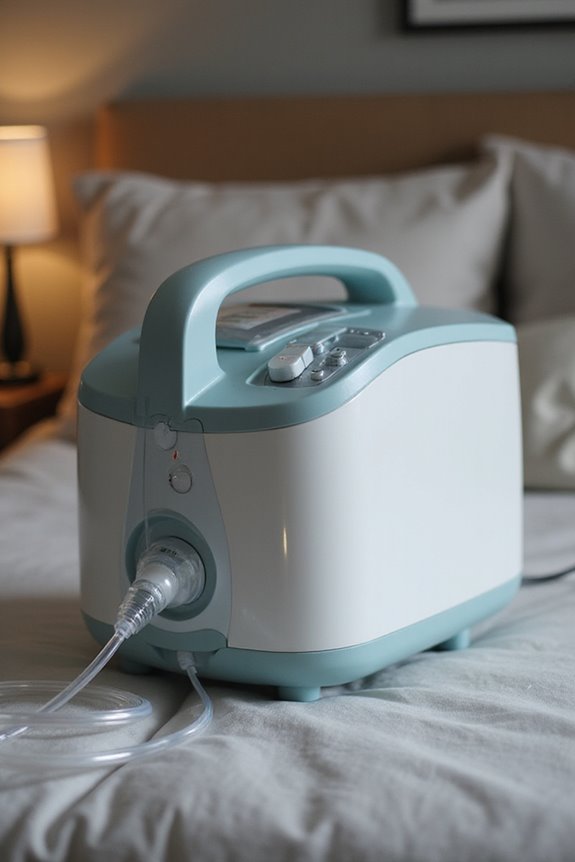
Physical characteristics and portability features greatly enhance the usability of portable oxygen concentrators (POCs) for individuals requiring oxygen therapy.
Weight Variations
– Devices range from 1.75 lbs for the AirSep Focus to 5.0 lbs for the Live Active Five.
Compact Design
– Models like the FreeStyle Comfort are engineered to fit easily in bags or purses.
Weight Distribution
– Some concentrators offer even weight distribution, providing comfort during use.
Battery Life
– Battery durations range from 3 to 6.5 hours, depending on the model.
Travel Readiness
– Many devices include custom carrying bags and support universal power compatibility for ease of transport.
These features collectively contribute to the practicality and convenience of POCs in daily life. Additionally, lightweight designs are essential for enhancing transportability, especially for elderly users.
Recommended Products

EXTENDED RUNTIME POWER. 16-cell high-capacity lithium-ion battery provides significantly extended operation time compared to standard batteries, helping reduce the need for frequent recharging

COMPLETE POWER KIT – Includes 1 rechargeable battery, 1 external battery charger, and AC power adapter for Rhythm Healthcare P2 series concentrators.

✔︎Two Battery Options - Choose between 8-cell and 16-cell batteries.
Technology and Oxygen Delivery Mechanisms
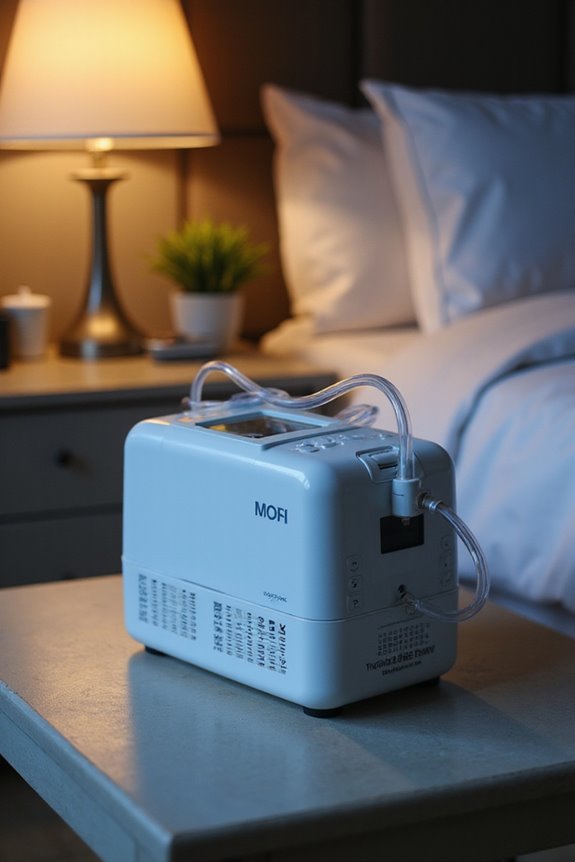
The technology behind portable oxygen concentrators (POCs) is primarily centered on advanced mechanisms that guarantee efficient oxygen delivery. Central to this technology is Pressure Swing Adsorption (PSA), which separates oxygen from ambient air by adsorbing nitrogen onto zeolite molecular sieves.
Key features include:
- Filtration and Compression: Air is filtered to remove impurities before being compressed, enhancing oxygen separation efficiency and adapting to delivery modes.
- Oxygen Delivery Mechanisms: POCs utilize continuous flow or pulse dose delivery, the latter conserving oxygen by releasing it only during inhalation.
- Monitoring Systems: Oxygen sensors continuously assess the concentration of delivered oxygen, ensuring therapeutic levels and user safety. Additionally, battery life is a crucial factor that influences the usability of portable oxygen machines, allowing for extended use away from power sources.
These combined technologies allow for effective oxygen therapy in a portable format, ensuring reliability and convenience for users.
Recommended Products

✔︎Up to 3.5 hours of operation on setting 2 for ARYA Q Powered by Drive and Drive iGo2 Portable Oxygen Concentrators.

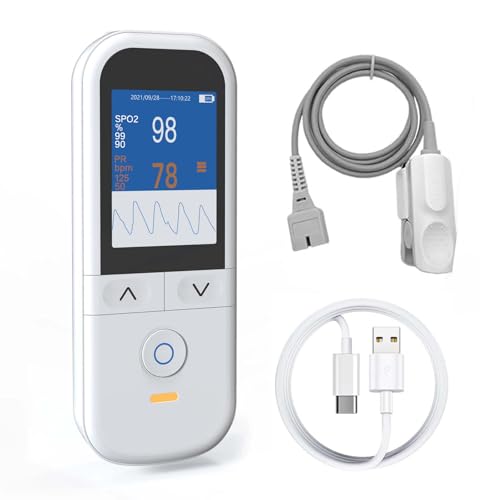
Pulse Oximeter:Continuously monitors SpO2 (70-100%, ±1%) and Heart Rate (25-250 bpm, ±1 bpm) accurately. Profesional pulse oximeter provides reliable fingertip health monitoring for the needs of the family
Uses and Benefits for Patients
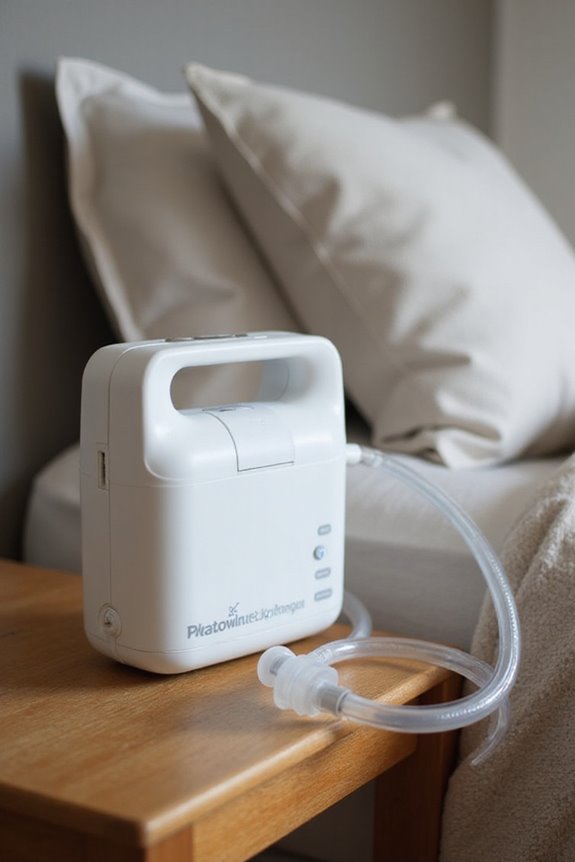
Portable oxygen concentrators (POCs) serve as an essential resource for patients with chronic respiratory conditions, enhancing both mobility and independence.
Enhanced Mobility
- Weighing less than 5 pounds, POCs facilitate transportation, allowing use in various settings.
- A battery life of up to 10 hours supports uninterrupted oxygen therapy.
Medical Benefits
- POCs prolong life expectancy in patients with COPD and hypoxemia.
- They provide critical oxygen levels, managing symptoms of respiratory diseases.
Psychological and Cognitive Benefits
– Steady oxygen supply enhances cognitive functions and emotional stability.
Convenience
- POCs eliminate the need for refills, generating oxygen from ambient air.
- Their compact design simplifies storage and supports patient lifestyle. Additionally, they are designed with low noise operation, ensuring minimal disruptions during rest and relaxation, which is essential for overall user comfort.
Incorporating POCs into daily routines markedly improves overall health outcomes and quality of life for patients.
Recommended Products

Energize Almost Everything. The EcoFlow DELTA Pro 3 supports 120V/240V voltage and has a 4000W output (6000W with X-Boost, scalable up to 12000W), powering nearly all essential home appliances, such as a 3-ton* central AC or a 1 HP water pump.

Extended Runtime – Enjoy up to 16 hours of power at setting 1 (8 hours at setting 2; 6 hours at setting 3) with this official CAIRE accessory.

Extended Battery Life: Enjoy up to 12 hours, 45 minutes of battery life at pulse dose setting 1, allowing you to take time to explore your surroundings. This extended runtime encourages your daily activities and outings, supporting an active lifestyle.
Differences Between Portable and Stationary Oxygen Equipment
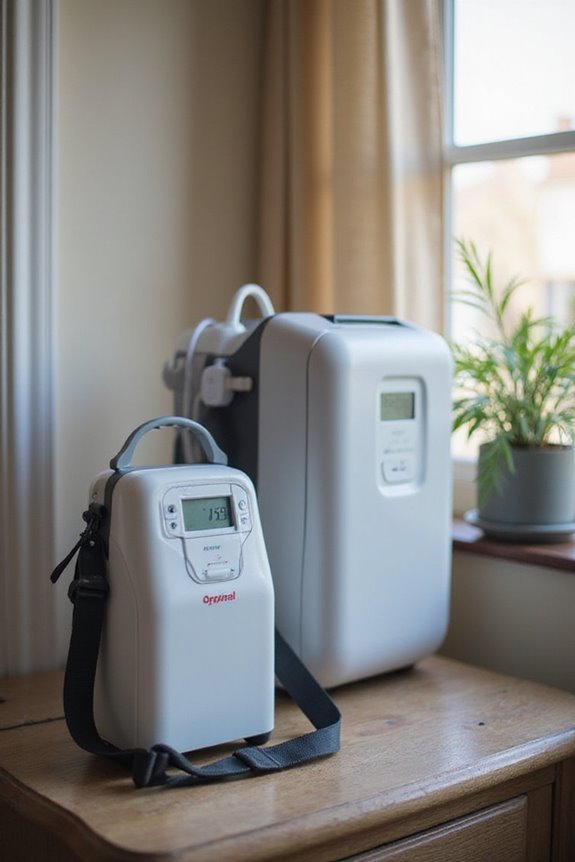
When comparing oxygen equipment, significant differences arise between portable and stationary oxygen concentrators.
Oxygen Output
- Stationary units provide continuous flow, delivering up to 10 liters per minute.
- Portable models typically use pulse flow, offering up to 2 liters per minute.
Power Sources
– Stationary concentrators require wall outlets, while portable units operate on rechargeable batteries, enhancing flexibility for users.
Size and Weight
– Portable concentrators are lightweight and compact, generally weighing between 2 and 20 pounds, unlike heavier stationary models.
Cost
– Portable units often have higher initial costs, but stationary units may provide long-term savings.
Usage Limitations
– Portable concentrators support mobility but are not suitable for continuous use; stationary units are ideal for full-time oxygen needs, showcasing stationary benefits. Additionally, portable oxygen concentrators often feature long battery life, making them convenient for short trips or outdoor activities.
Recommended Products

Extended Battery Life: The Inogen Extended Battery offers up to 5 hours of battery life on pulse-dose setting 1, giving you time to enjoy your activities before recharging.

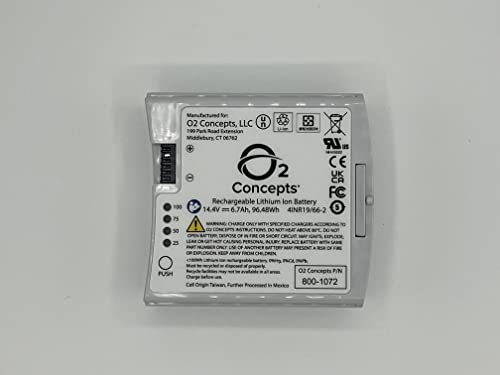
[Revolutionary Extended Runtime Tech] Powered by advanced semi-solid LiFePO4 cells and AI-driven BMS, Dabbsson 1000L offers 1.3X extended runtime for appliances <300W. Experience reduced energy loss, higher efficiency, and stable output for longer-lasting performance. It delivers over 4000 charging cycles and 10+ years of reliable use. Advanced thermal management and 56+ safety protections guarantee superior durability and safety for outdoor and indoor power.
Rechargeable
Examples and Market Availability of Portable Oxygen Concentrators
Weight: The CAIRE FreeStyle Comfort weighs about 5 pounds, while the Inogen Rove 4 is ultra-light at under 3 pounds.
The market for portable oxygen concentrators (POCs) is evolving, with increased competition driving innovation. Popular models include:
- Inogen Rove 4: Ideal for active users, offering four pulse dose settings and over 5 hours of battery life.
- CAIRE FreeStyle Comfort: Provides five pulse flow settings and FAA approval for air travel.
- O2 Concepts Oxlife Liberty 2: Features both pulse and continuous flow options, catering to diverse oxygen needs.
User feedback highlights an emphasis on lightweight designs and quiet operation. As market trends shift, consumers benefit from enhanced portability and efficiency, with extensive online resources available for informed decision-making. Additionally, many models are designed to meet safety standards to ensure reliable operation and user protection.
Recommended Products

OXYGEN CONCENTRATOR NOT INCLUDED. This listing includes the OXYGEN CAGE and accessories only. An oxygen concentrator is required for operation and must be purchased separately.

Designed for Compatibility: The Inogen External Battery Charger is designed to charge the Inogen One G5 and Inogen Rove 6 batteries, for on-the-go performance and reliability.
Frequently Asked Questions
How Do I Maintain My Portable Oxygen Concentrator?
To maintain the device effectively, one should follow cleaning tips diligently, ensuring filters are cleaned weekly and replaced regularly. Adhering to these practices fosters a sense of belonging within a supportive community focused on health and wellness.
Can I Travel With My Portable Oxygen Concentrator on Airplanes?
Traveling with a portable oxygen concentrator is permissible under airline regulations, provided it meets FAA standards. Passengers should follow essential travel tips, including notifying airlines, carrying necessary documentation, and ensuring battery power for a smooth journey.
What Is the Average Lifespan of a Portable Oxygen Concentrator?
When it comes to longevity, the average lifespan of a portable oxygen concentrator typically ranges from four to seven years. Proper maintenance tips, like regular cleaning and battery care, can extend this time substantially, ensuring reliable performance.
Are There Any Side Effects of Using a Portable Oxygen Concentrator?
Side effects often accompany user experiences with oxygen concentrators, including dryness and irritation of mucous membranes, fatigue, and mild headaches. Most effects are manageable with care, highlighting the importance of regular monitoring and proper usage.
How Do I Know if My Portable Oxygen Concentrator Is Working Correctly?
When Sarah noticed her device indicators flashing unexpectedly, she checked the oxygen flow settings and verified there were no blockages. Regular monitoring of these factors can help confirm the concentrator is functioning correctly and safely.