As an Amazon Associate, we earn from qualifying purchases. Some links on this site are affiliate links at no extra cost to you. Our recommendations are based on thorough research and editorial judgment.

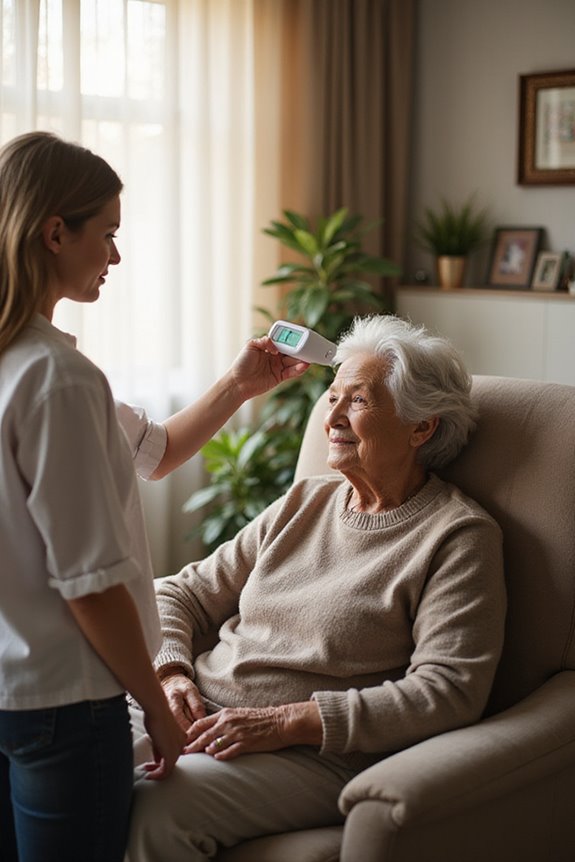
How to Use a No-Touch Forehead Thermometer: 2026 Guide

To use a no-touch forehead thermometer, guarantee proper preparation by cleaning and drying the forehead. Set up the device by installing batteries and selecting temperature units. Position the thermometer 1-5 cm from the forehead, aligning it between the eyebrows. Maintain a steady hand to guarantee accurate readings. Post-measurement, clean the sensor, and store the device appropriately. Understanding its functionality is essential for accurate assessments. Further information on usage protocols and maintenance can enhance temperature measurement effectiveness.
Key Takeaways
- Allow the thermometer to acclimatize for 10 to 30 minutes in the intended environment before use.
- Ensure the forehead is clean, dry, and free from obstructions like hair or sweat for accurate readings.
- Position the thermometer 1-5 cm (0.4-2 inches) away from the center of the forehead for precise measurements.
- Keep the thermometer steady and maintain a stable ambient temperature, avoiding direct sunlight or drafts during measurement.
- Clean the probe lens with alcohol after use and store the thermometer in a dry, safe location away from direct sunlight.
Preparation and Safety Guidelines
You may be interested

Proper preparation and adherence to safety guidelines are essential when using a no-touch forehead thermometer. Users must consider the following safety precautions and environmental factors:
- Acclimatization: Allow the thermometer to acclimatize for 10 to 30 minutes in the environment where it will be used, minimizing the impact of external temperatures on accuracy.
- Measurement Area: Confirm the forehead is clean, dry, and unobstructed, removing hair, hats, or sweat that may affect readings.
- Device Maintenance: Keep the sensor area clean and dry; avoid immersion in liquids and regularly inspect for contamination.
- Positioning: Maintain a perpendicular angle to the forehead for best measurement accuracy.
These guidelines are critical to confirm reliable readings and minimize risks associated with improper use.
Recommended Products

Non-contact Thermometer: According to the infrared technology, you can measure body temperature without touching the ear or the forehead, prevent cross-infection between multiple people. Measurement Distance: 2-3.15 inch.
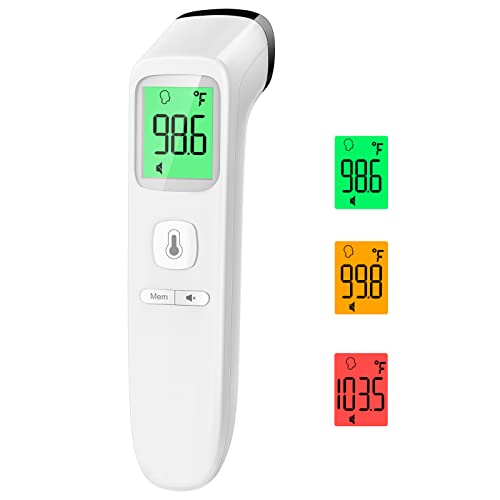
Reliable & Accurate: Goodbaby Forehead Thermometer has been clinically tested and found to be a fast and absolutely reliable gadget to use. It is ideal for forehead readings.

Forehead thermometer with silent mode: With the push of a button, you can switch this digital thermometer for adults and kids to silent mode for a quick temperature check that won’t interrupt your family while they rest to recover
Device Setup Instructions
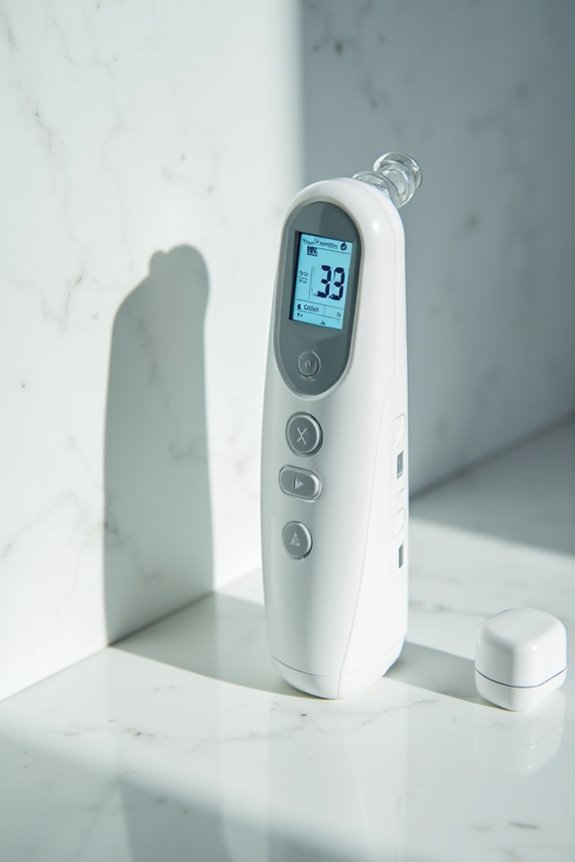
Following the preparation and safety guidelines, the next step involves setting up the no-touch forehead thermometer for accurate temperature measurement.
Device Powering and Initialization
- Install 2 AAA batteries, guaranteeing correct polarity.
- Activate the device by pressing the power button until the display shows startup indicators.
Calibration and Temperature Units
- Confirm device calibration by following the user manual.
- Select preferred temperature units (°C or °F) using designated buttons; make sure settings are saved.
Mode Selection
- Set the thermometer to forehead mode by pressing the mode button until the appropriate icon appears.
- Verify the unit of measurement on the display before proceeding.
Final Checks
– Verify the sensor area is clean and unobstructed to maintain accuracy.
Recommended Products

✨Swift Results in Just 1 Second: Experience the efficiency of ANMEATE thermometer for adults with its remarkable 1-second read capability. Obtain accurate temperature readings swiftly, providing you with timely and dependable results.

Get reliable, precise temperature readings in just 1 second with this no-touch forehead thermometer. Equipped with a high-sensitivity infrared sensor, it delivers consistent results for babies, children, and adults, giving you peace of mind whenever you need to check for fever. The thermometer supports both ℉ and ℃ switching, meeting all your daily temperature measurement needs at home.

1s FAST & & HIGH ACCURATE - femometer forehead thermometer is equipped with clinically proven high precision infrared sensor, the measurement result can be accurate to 0.1°F/℃, the accuracy is ±0.4°F/ ±0.2℃. Just press the "START" button 0.2 to 1.2 inches from the forehead to get the result in 1 second
Proper Positioning for Measurement
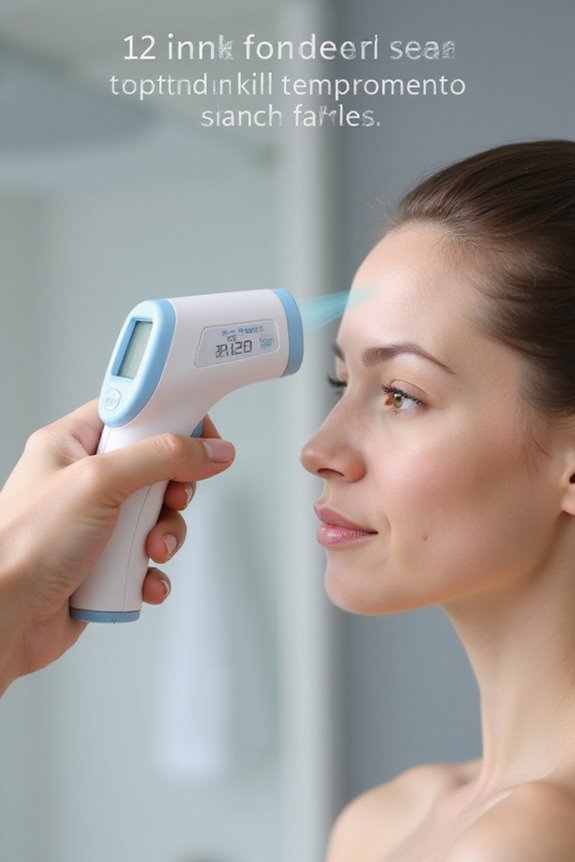
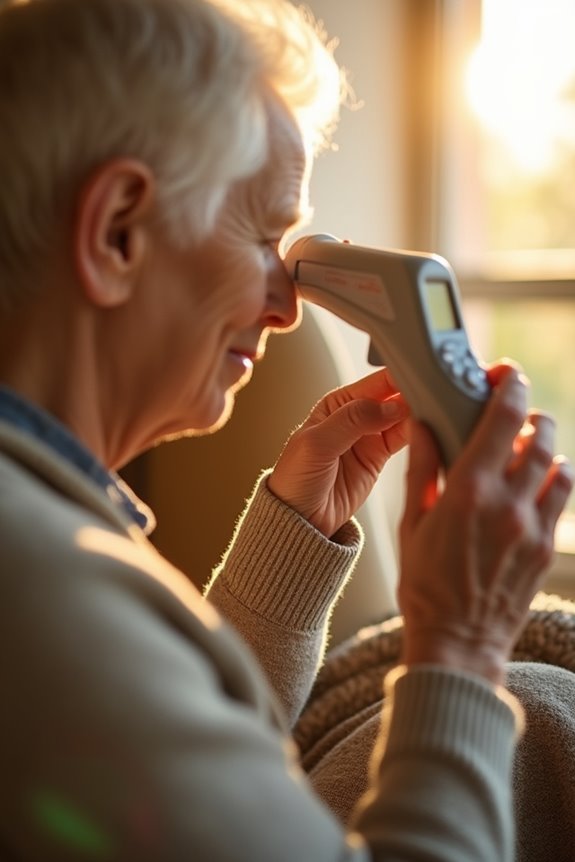
Achieving accurate temperature measurements with a no-touch forehead thermometer requires careful positioning of the device. Proper measurement techniques dictate that the thermometer should be placed 1-5 cm (0.4-2 inches) away from the forehead, specifically between the eyebrows.
- Sensor Alignment: Align the sensor with the forehead’s center for precise readings.
- Steadiness: Both the thermometer and forehead must remain steady to avoid errors.
- Environmental Conditions: Guarantee a stable ambient temperature, free from direct sunlight, fans, or air conditioning.
Additionally, clean the forehead of any hair, sweat, or dirt before measurement. This clarity supports effective sensor alignment, enhancing the overall accuracy of results. Consistent adherence to these guidelines will guarantee reliable temperature readings. Remember that infrared thermometers are designed for non-contact temperature measurement, making them ideal for quick assessments.
Taking Accurate Temperature Readings
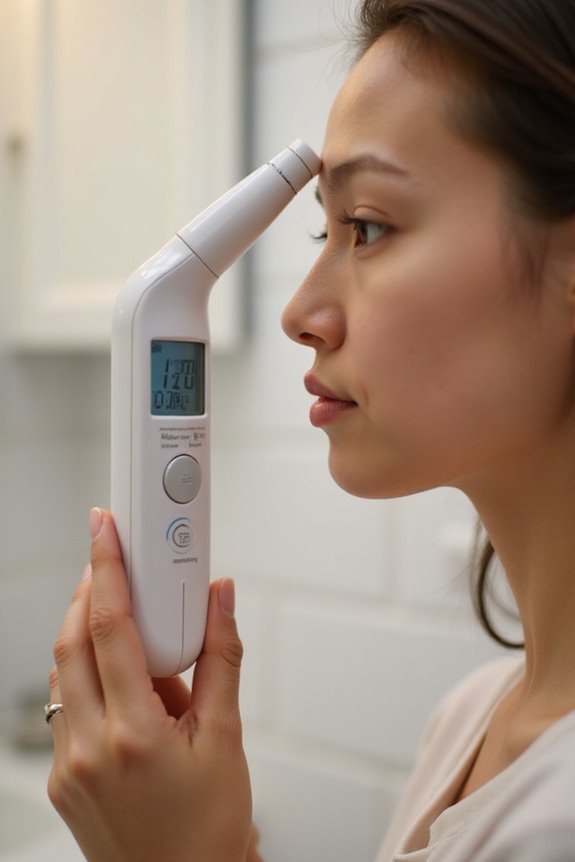
Taking accurate temperature readings with a no-touch forehead thermometer (NCFIT) necessitates adherence to specific guidelines and consideration of various influencing factors.
Measurement Accuracy
- NCFITs may show discrepancies of ±0.01°C to ±0.2°C compared to rectal thermometers.
- Accuracy declines above normal body temperatures, often missing fevers above 99.5°F (37.5°C).
- Environmental factors such as sunlight and drafts can affect readings.
User Factors
- Confirm the forehead is clean, dry, and free from sweat or obstructions.
- Hold the thermometer at a distance of 1 to 3 centimeters.
- Consistent measurement protocols enhance accuracy, including using the same site on the forehead for repeated readings.
Following these practices confirms improved measurement accuracy and reliability when using NCFITs.
Interpreting Temperature Results
Interpreting temperature results from a no-touch forehead thermometer requires an understanding of both the normal temperature range and the implications of specific readings.
- Normal forehead temperature typically falls between 31.0°C to 35.6°C (97.8°F to 96.1°F).
- Readings above 35.6°C (96.1°F) may indicate fever, but confirmation through further studies is necessary.
- Temperature accuracy can vary, as forehead thermometers might not match the precision of ear thermometers.
- Environmental factors, such as drafts or direct sunlight, can also impact accuracy.
- It is essential to compare results against other methods, as forehead measurements may reflect lower values than rectal readings.
Understanding these aspects helps users make informed decisions regarding health monitoring and fever thresholds in various settings.
Post-Measurement Care and Maintenance
Post-measurement care and maintenance of a no-touch forehead thermometer is essential for guaranteeing its longevity and accuracy.
Lens Cleaning
- Clean the probe lens using a 70-75% alcohol swab or a soft cotton moistened with alcohol.
- Allow the lens to dry for at least one minute prior to use.
- Avoid tissue paper and unapproved cleaning agents, using only soft dry cloths or cotton swabs.
Storage Safety
- Store the thermometer in a dry, stable location, away from direct sunlight and liquids.
- Confirm it is free from corrosive gases and vibrations.
- Regularly inspect the lens for damage, and replace batteries as needed. Maintain a controlled environment to enhance durability and functionality.
Troubleshooting Common Issues
Troubleshooting common issues with no-touch forehead thermometers requires a systematic approach to identify and resolve potential problems.
Measurement Errors
- Verify measurement distance is within 1–4 cm.
- Avoid pressing the button while moving the device; position it first.
- Allow acclimation in stable temperatures (15–40°C) for 30 minutes.
- Humidity and atmospheric pressure can affect readings.
Calibration Issues
- Reset firmware by removing batteries for 60 seconds.
- Persistent error messages may indicate a defective device.
- Clean the infrared lens regularly to prevent false readings.
Battery Troubles
- Replace batteries with fresh, recommended types.
- Verify buttons are not stuck, as this may mimic faults.
- Low battery indicators can signal operational issues.
Recommended Products
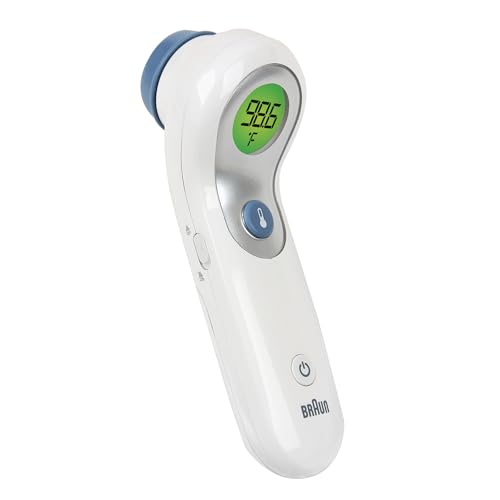
Easy to read: This digital thermometer’s color coded temperature guidance provides results at a glance; green suggests a normal temperature, yellow signifies an elevated temperature, and red indicates a high temperature
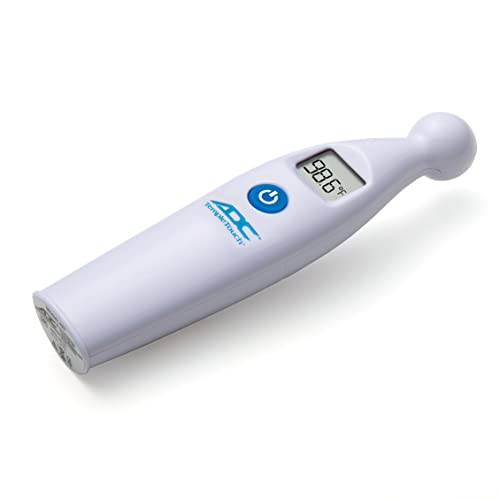
FAST, RELIABLE RESULTS: Non-invasive temperature measurement delivers clinically validated readings in about 6 seconds. Meets accuracy requirements for intermittent thermometers under ASTM E1112 and is backed by a 2-year warranty.

For All Ages: This Celsius & Fahrenheit digital thermometer for home use takes a temperature in seconds; with a gentle, ergonomic design and easy to use controls, it can be used as a baby thermometer, for kids and as a thermometer for adults
Frequently Asked Questions
Can I Use the Thermometer on Infants?
When considering thermometer safety in infant care, non-contact thermometers may be used cautiously. However, health authorities advise against their use for infants under 2 years due to potential accuracy concerns. Always consult guidelines for safe application.
How Often Should I Clean the Thermometer?
Cleaning frequency is essential for maintaining thermometer accuracy and hygiene. Regular maintenance tips suggest cleaning before each use, after multiple users, and following disinfection guidelines to guarantee safety and reliability for everyone involved in temperature monitoring.
Is the Thermometer Safe for All Skin Types?
Despite concerns about skin sensitivity, no-touch forehead thermometers are safe for all skin types, including sensitive skin. Constructed from non-irritating materials, they guarantee comfort and reliability for everyone, fostering a sense of belonging in health management.
Can I Measure Temperature Through Clothing?
Measuring temperature through clothing greatly diminishes reading accuracy due to clothing interference. To guarantee reliable results, it is essential to take readings on clean, exposed skin, free from any barriers that might distort measurements.
What Should I Do if the Reading Seems Inaccurate?
When faced with reading discrepancies, one should consider calibration tips, such as verifying accuracy against a standard thermometer, ensuring a clean measurement surface, and allowing the forehead to acclimate to room temperature for reliable results.